 | The Project of Compilation and Documentation on Refugees and Migrants The University of Tokyo |
Welcome!
|
CDR, the Project of Compilation and Documentation on Refugees and Migrants, is a project run by the Research Center for Sustainable Peace (RCSP), Institute of Advanced Global Studies (IAGS), the University of Tokyo. We are continuing our research for better protection and assistance for refugees and other forced migrants such as people escaping from generalized violence, human traficking, and climate change etc. To achieve our goal of becoming a hub for dynamic and cutting edge research on people on the move, we have reformed our organization in May 2014. Now we are a part of a uniting and authorized research body of the University of Tokyo, changed from former organization as the secretariat of the Human Mobility Studies , 5-year donated project by the Hogakukan co. ltd. to the University of Tokyo. We have also innovated a research model to create more socially significant value of research outcomes, in cooperation with private companies concerned: COI Research and Refugee Law Lecture for the Public. CHECK OUT THE EVENT on 23 Apr. 2015 ¦ Practical Training on Human Security I: AGDM, local Integration of Refugees, and UNHCR in Japan [Special Lecture by Mio Shindo, UNHCR Representation in Japan]
RECENT [PAST] EVENTS:
|
|
News
[September 26, 2016]
The web server of CDR has been changed from the previous machine to new secure one.
[May 25, 2014]
We would like to report some important organizational developments for CDR. In April 2014, the Institute of Advanced Global Studies (IAGS) of the University of Tokyo decided to officially reconstitute CDR as one of its research projects. Though CDR has engaged in several research projects since its establishment, it had been basically a secretariat of the lecture series project “Refugees and Migrants” donated by Hogakukan co.ltd. By this recent organizational change, CDR became an official project specialized in research on movement of people including refugees and migrants. CDR's new name in IAGS is the Project of Compilation and Documentation on Refugees and Migrants (CDR). Please see "Developments of HMS/CDR" for more details.
Although our name has changed, our acronym remains CDR, and our work continues to be focused on the documentation and dissemination of information on forced displacement and migration issues, to be considered from a broad range of disciplinary perspectives. Our tasks include inviting experts including academic researchers and practitioners, government officers, and lawyers to discuss the pressing issues in our field of research. In addition, by the publishing of original research and information and by providing lectures and training sessions for students, professionals, and the general public, CDR contributes to the building of a more conscious public opinion on human mobility and the future of our society. Moreover, the CDR is developing an online database for knowledge accumulation and dissemination.
In this issue, we are proud to introduce former CDR staff Shikiko Masutomi's article based on her master's dissertation, which won the Michael Oakeshott Prize for best dissertation from the London School of Economics and Political Science. Her analysis of refugee resettlement in Europe from a moral perspective is sure to provide insight into the fledgling refugee resettlement programme in Japan as well.
The working papers include an anthropological consideration of tourism and the East Japan Disaster by Professor Shinji Yamashita, and an introduction of statelessness and UNHCR's work by Mai Kaneko. In the Asian Digest section, CDR staff Kie Horikoshi explains our research project on access to Japanese language education in Japan. Finally, the interview features three judges from the International Association of Refugee Law Judges (IARLJ), with which CDR has collaborated over the years.
We would like to thank the authors and interviewees for their valuable contributions, and welcome submissions relating to human mobility from all parts of the world.
CHECK OUT THE EVENT on 20 Mar. 2015 ¦ Multidisciplinary and Multicultural Support for Immigrants in Japan [Organized by GLOCOL of Osaka University]
RECENT [PAST] EVENTS:
[28 Feb. 2015] ¦ Current Situation and Challenges of Japanese Refugee Policy: From the View Point of Public Goods
[21 and 22 Nov. 2014] ¦ Refugee Law Comparative Forum 2014
Refugee Law Comparative Forum 2014 [PAST]
A comparative forum on international protection
in Japan, Republic of Korea, the Philippines and Hong Kong,
and how international “Rule of law” and rights based approaches can lead to
quality assurance and cost effective
protection systems for refugees and others in need
Programme in PDF
We are happy to announce the 5th intensive open seminar and symposium on international protection, co-hosted by CDR, IARLJ, and HSP.
Started in 2009, this series of intensive seminar/symposium has been funded by Hogakukan Co. Ltd. to disseminate research outcomes of CDR, cooperated with distinguished guest lecturers from around the world. By mainly focusing on the issues of refugees and other displaced persons with the perspectives both from academia and practitioners, this seminar/symposium has been providing profound learning and practical knowledge to various participants and students.
This year's grand theme is “asylum system”, in which we would discuss protection issues comprehensively and systematically. By comparing with international and other countries' standards not limited to legal norms, we are aiming to articulate an ideal and realistic way of improving Japanese asylum system to more rights conscious one: a system in which the right to asylum is respected with all the applicable human rights standards.
Organizers:
- CDR: The Project of Compilation and Documentation on Refugees and Migrants, the University of Tokyo
- HSP: Graduate Program on Human Security, the University of Tokyo
- IARLJ: International Association of Refugee Law Judges
- HMS: Human Mobility Studies (donated by Hogakukan Co. Ltd., FY2009-2014), the University of Tokyo
- UNHCR Representation in Japan
- UNHCR Representations in Seoul, Manila and HK
- HSF: Human Security Forum (Non-Profit Organization registered in Japan)
- The Japan Chapter of the Asian SIL
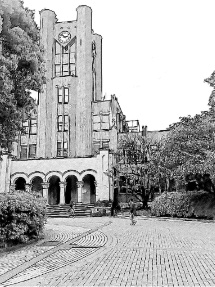
Graduate School of Mathematical Sciences
Komaba I Campus, the University of Tokyo
Access Map
Komaba Todai-Mae Station, Keio Inokashira Line
[the second station from Shibuya station]
Please fill out the following information and send the Email to: cdr.autumn.seminar@gmail.com
- Your name [e.g. Mr. Chandra Bose; Ms. Margaret Thatcher; Dr. Anthony Kobayashi]
- Your affiliation [e.g. Harvard Univ; Ministry of Foreign Affairs; ABC Company; etc.]
- Phone number
- Date(s) you wish to participate: either/both of 21st Fri. and 22nd Sat.
A certificate of participation will be issued by the International Association of Refugee Law Judges [IARLJ] to all who able to participate the symposium/seminar in accordance with certain standard [TBA].
♦ The certificate is given by IARLJ independently , one of the co-organizer of the event.
DAY 1: Morning
Registration 8:30 - 9:00
Opening Remarks 8:55 - 9:00
Professor Hideo Kimura, Director of Human Security Program, The University of Tokyo
Professor Yasunobu Sato, Director of Research Center for Sustainable Peace, The University of Tokyo
[Session 1] 9:00 - 12:00
Comparative Policy and Law
〈Korea〉
1.New Refugee Law in South Korea: Context and Challenges
Presentation by: Judge Seong Soo Kim, Suwon District Court [on Skype link up]
Discussant: Ms. Hyun Young Chae, Legal Officer, UNHCR Seoul
〈Japan〉 2. An Overview and Current Issues in Japan’s Asylum System
Presentation by: Mr. Shogo Watanabe, Attorney at Law
Discussant: Mr. Hiroshi Miyauchi, Attorney at Law
〈Philippines〉
3. Developments and Challenges in The Philippines Asylum System
Presentation by: Chief State Counsel Ricardo V. Paras, Department of Justice, Head of the Refugee and Stateless Persons Protection Unit, Manila
Discussant: Professor Sedfrey M. Candelaria, Dean of Law School at Ateneo University, Manila
〈Hong Kong〉
4. Developments and Challenges in Hong Kong Asylum System
Presentation by: Mr. Billy Woo, Principal Assistant Secretary, Hong Kong Security Bureau
Discussant: Ms. Sally Cheung, Principal Immigration Officer, Hong Kong
[Session 2] 12:00 - 13:00
Future of International Co-operation in Refugee and Protection Law
1. International Refugee and Complementary Protection - Background, Core Principles and Assistance
By Judge Allan Mackey, Project Director & former President, IARLJ
2. Possibilities/proposals for future regional co-operation and mutual assistance
Floor discussion for all participants and UNHCR led by Professor Yasunobu Sato and Judge Allan Mackey
Lunch Break 13:00 - 14:00
Day 1: Afternoon
[Session 3] 14:00 - 14:25
Book Launch of the Japanese Edition of “The Rights of Refugees under International Law”(Cambridge University Press, 2005 / Nippon Hyoron Sha, 2014) and Presentation of Other Research Outcomes by CDR
Video message by Professor James C. Hathaway, University of Michigan Law School
Official book launch and presenation by Professor Yasunobu Sato, Dr. Satoshi Yamamoto, and Ms. Miki Arima, CDR, The University of Tokyo
[Session 4] 14:25 - 16:45
The Current Review of Japan’s Asylum System - Can It Be a Path to International Rights Based, High Quality Refugee Status Determination (RSD) in Japan?
1. Identifying the Challenges and Subcommittee Review of Refugee Status Determination & Protection Systems in Japan
By Professor Saburo Takizawa, Toyo Eiwa University
and others (to be announced)
2. The Rights Based Approach to Refugee and Complementary Protection
By Professor Yasunobu Sato and Dr. Satoshi Yamamoto, The University of Tokyo
3. Some Relevant Australian Perspectives & the Future of CDR
By Professor Yasunobu Sato, The University of Tokyo
4. Comments on the Review of RSD in Japan from an International Perspective
By Judge Allan. Mackey, former President of IARLJ
Q&A and responses by a panel of speakers
Chair: Judge Martin Treadwell, IARLJ Councillor
DAY 2: Morning
Registration 9:00 - 9:30
[Session 5] 9:30 - 11:40
Domestic Humanitarian Protection for Failed Asylum Seekers
1. Overview of Day 1 and Introduction to Wider Humanitarian Protection Alternatives
By Judge Martin Treadwell, IARLJ
2. “Humanitarian Guidelines”? - The current Japanese Procedures at the End of RSD
By Dr. Satoshi Yamamoto and Ms. Miki Arima, The University of Tokyo
3. New Zealand and UK Systems of Domestic Protection
By Judge Allan Mackey and Judge Martin Treadwell, IARLJ
4. Brief Comparisons with Korea, Philippines and Hong Kong
By representatives from the three countries/region
The Right to Seek Asylum - Cases Studies from Europe and the Japanese Situation
By Dr. Satoshi Yamamoto, The University of Tokyo
Q&A
[Session 6] 11:40 - 12:30
Efficiency Procedures based on internationally accepted norms - in practice
1. Formal and Informal Ways to Improve Quality Decision Making and Speed of Processing of RSD / Protection Appeals
By Judge Martin Treadwell, IARLJ
2. Quality Assurance and Cost Efficiency in RSD and the Relationship to the Core International Fundamentals - Some Examples
By Judge Allan Mackey, IARLJ
[Session 7] 12:30 - 13:00
Conclusions
Capacity Building and Co-operation for Refugee Protection in Asia
By UNHCR representatives
Q&A, Discussion, final word from each country/region and future co-operation
Panel Chaired by Judge Martin Treadwell
Closing Remark
Professor Daisaku Higashi, Deputy Director, Research Center for Sustainable Peace, The University of Tokyo
Close of Seminar
About us
Staff
-
Director
Prof. Yasunobu SATO -
Vice-Director / Web Director
Dr. Satoshi YAMAMOTO -
Editorial Coordinator
Miki ARIMA -
Secretariat
Kie HORIKOSHI -
Assistant Researcher
Kumiko NIITSU -
Visiting Researcher
Douglas MACLEAN
Lecturers
Interns
- Satomi HIYAMA (International Christian University, Summer of 2010)
- Stephanie YASUNAGA (Harvard University, Summer of 2010)
- Nara LEE (Harvard University, Summers of 2008 and 2009)
- Yumiko NISHIOKA (The University of Tokyo, Summer of 2011)
- Nga Hong Hanh Nguy (Harvard University, Summer of 2012)
Associates
- Dr. Takuto SAKAMOTO
- Junko MIURA
- Yukiko ABE
- Yasuko YAMADA
- Shikiko MASUTOMI
- Jordan NOGAKI
- Joseph TABAGO
- Magdalena IONESCU
Address
- Postal Address: The Project of Compilation and Documentation on Refugees and Migrants, Rm.307, Bldg.9, The Graduate School of Arts and Sciences, The University of Tokyo. 3-8-1 Komaba, Meguro-ku, Tokyo 153-8902, Japan
- Location 〈Google Map〉 〈Access to CDR〉
- Email Address: cdr[atmark]hsp.c.u-tokyo.ac.jp
本データベースは、JSPS科研費 16HP8015 の助成を受けたものです。
This database was supported by JSPS KAKENHI Grant Number 16HP8015.